logo
Home
Products
About Us
Factory Tour
Quality Control
Contact Us
Request A Quote
News
Blog
Home Blog

Industrial Connectors Boost Reliability for Critical Systems

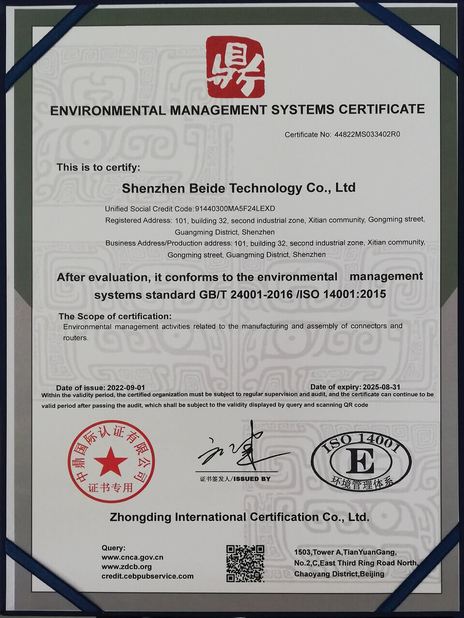
Certification
China DONGGUAN BEDE MOLD AND PLASTIC FRODUCTS CO., LID certification
Customer Reviews
Hi Elissa, Early last year, a coworker of mine had ordered 20 cables from your company. The cables your company made for us worked quite well, and I’m interested in using your company to produce more of these cables in the future.

—— Matthew Goetzman

Competitive price, high quality service, we will cooperate with you for a long time!

—— Донгeк Илья

I'm Online Chat Now
Company Blog
Industrial Connectors Boost Reliability for Critical Systems
Latest company news about Industrial Connectors Boost Reliability for Critical Systems

In highly automated production lines, a single minor connection failure can bring an entire system to a standstill, resulting in significant economic losses. The reliability of equipment connections has become a paramount concern across industries.

Industrial-grade panel-mount connectors serve as more than simple linking components—they form the foundation for stable operations in industrial and commercial systems. These specialized devices play a crucial role in maintaining uninterrupted workflows.

Stable Connections, Guaranteed Performance: The Core Value of Panel-Mount Connectors

As their name suggests, panel-mount connectors are electrical components designed specifically for installation on panels or enclosures. They find extensive application in manufacturing, robotics, automation systems, data centers, and laboratory environments where connection reliability is essential.

Compared to standard connectors, panel-mount versions offer distinct advantages:

  • Durability for harsh environments: Industrial settings present numerous challenges, including high temperatures, moisture, dust, and vibration. High-quality panel-mount connectors typically use robust materials like stainless steel, aluminum alloys, and engineering plastics, providing excellent corrosion resistance, wear protection, and impact tolerance for long-term stable operation.
  • Enhanced safety and reliability: These connectors secure firmly to panels or enclosures using nuts, bolts, or other fasteners, minimizing risks of loosening or detachment. This stable connection method effectively prevents signal interruptions, equipment failures, and safety incidents caused by poor contact.
  • Versatile configurations: Available in numerous sizes, shapes, and configurations, panel-mount connectors can be customized for specific applications and cable types. They accommodate shielded cables, twisted pair cables, coaxial cables, and fiber optic cables with equal efficiency.
Cable Selection for Optimized System Performance

When paired with appropriate cable types, panel-mount connectors address diverse application requirements:

  • Shielded cables: Featuring metal shielding around conductors, these cables effectively suppress electromagnetic interference (EMI), ensuring signal purity. Commonly used in high-voltage, high-frequency applications like robotics and automation systems.
  • Twisted pair cables: The twisted configuration reduces crosstalk and improves signal transmission quality, making them ideal for data centers and laboratory environments.
  • Coaxial cables: With high bandwidth and low signal attenuation, these cables excel in radio frequency applications including wireless communications and television systems.
  • Fiber optic cables: Utilizing light signals for data transmission, they offer superior speed, distance capabilities, and interference resistance, making them essential for high-speed data networks and communication infrastructure.
Selection Guide: Choosing the Right Panel-Mount Connector

Several critical factors must be considered when selecting panel-mount connectors:

  • Operating environment: Evaluate temperature ranges, humidity levels, corrosive elements, and vibration exposure. Select connectors with appropriate protection ratings (such as IP ratings) and durable materials.
  • Cable compatibility: Identify the required cable type and match the connector interface and dimensions accordingly.
  • Signal characteristics: Consider whether the application involves analog signals, digital signals, or RF signals, then select connectors with suitable bandwidth and impedance properties.
  • Electrical requirements: Determine current and voltage needs to ensure connectors meet or exceed required ratings.
  • Installation method: Evaluate mounting options including threaded, snap-in, or soldered connections based on maintenance and accessibility needs.
  • Certifications: Verify compliance with relevant industry standards and safety certifications such as UL, CE, and RoHS.

Proper connector selection forms the backbone of reliable industrial systems, preventing minor connection issues from escalating into major operational disruptions. The right components ensure continuous productivity while minimizing downtime risks.

Pub Time : 2026-03-07 00:00:00 >> Blog list
Contact Details
DONGGUAN BEDE MOLD AND PLASTIC FRODUCTS CO., LID

Contact Person: Ms. admin

Tel: 15915396878

Send your inquiry directly to us (0 / 3000)